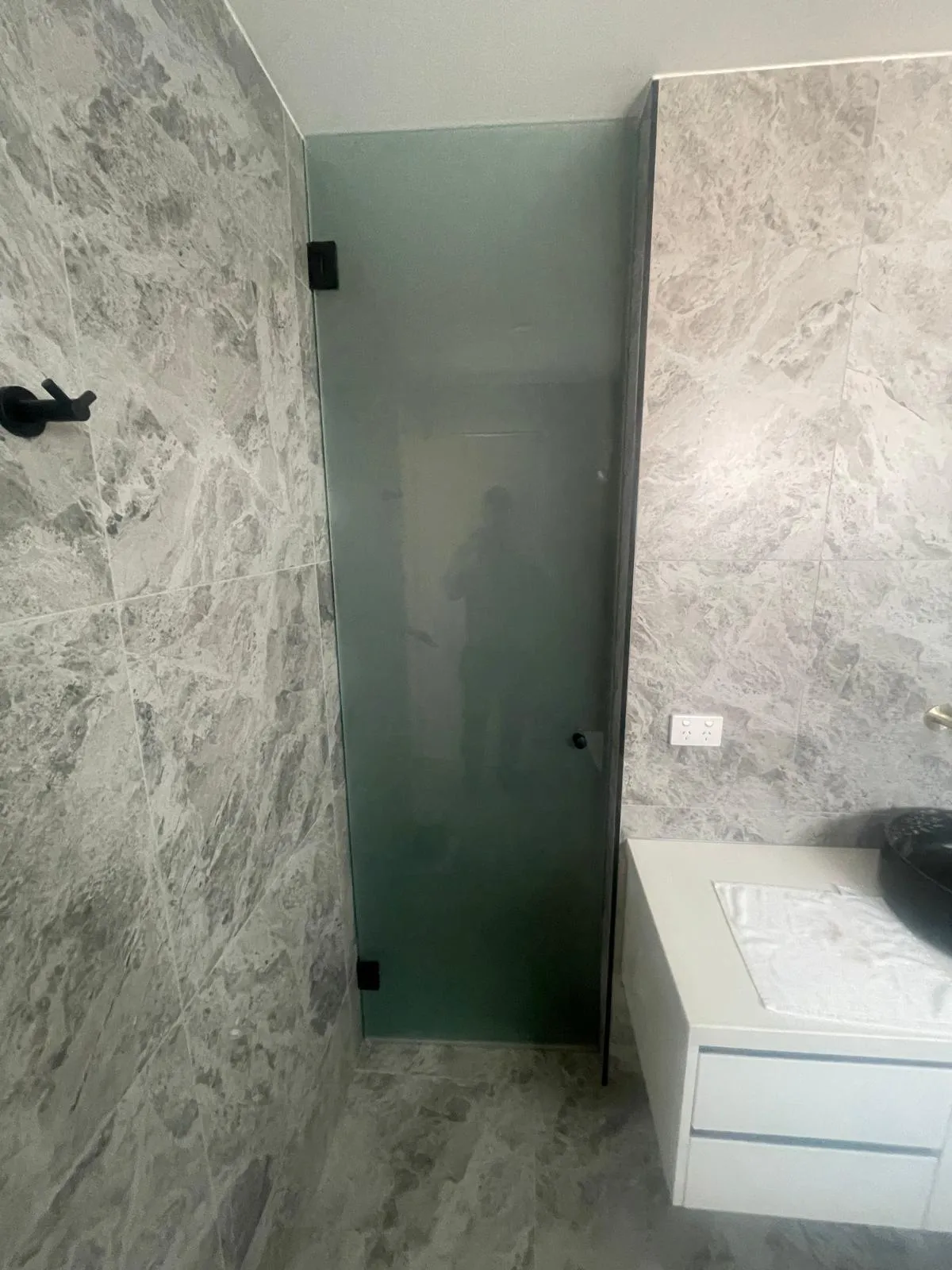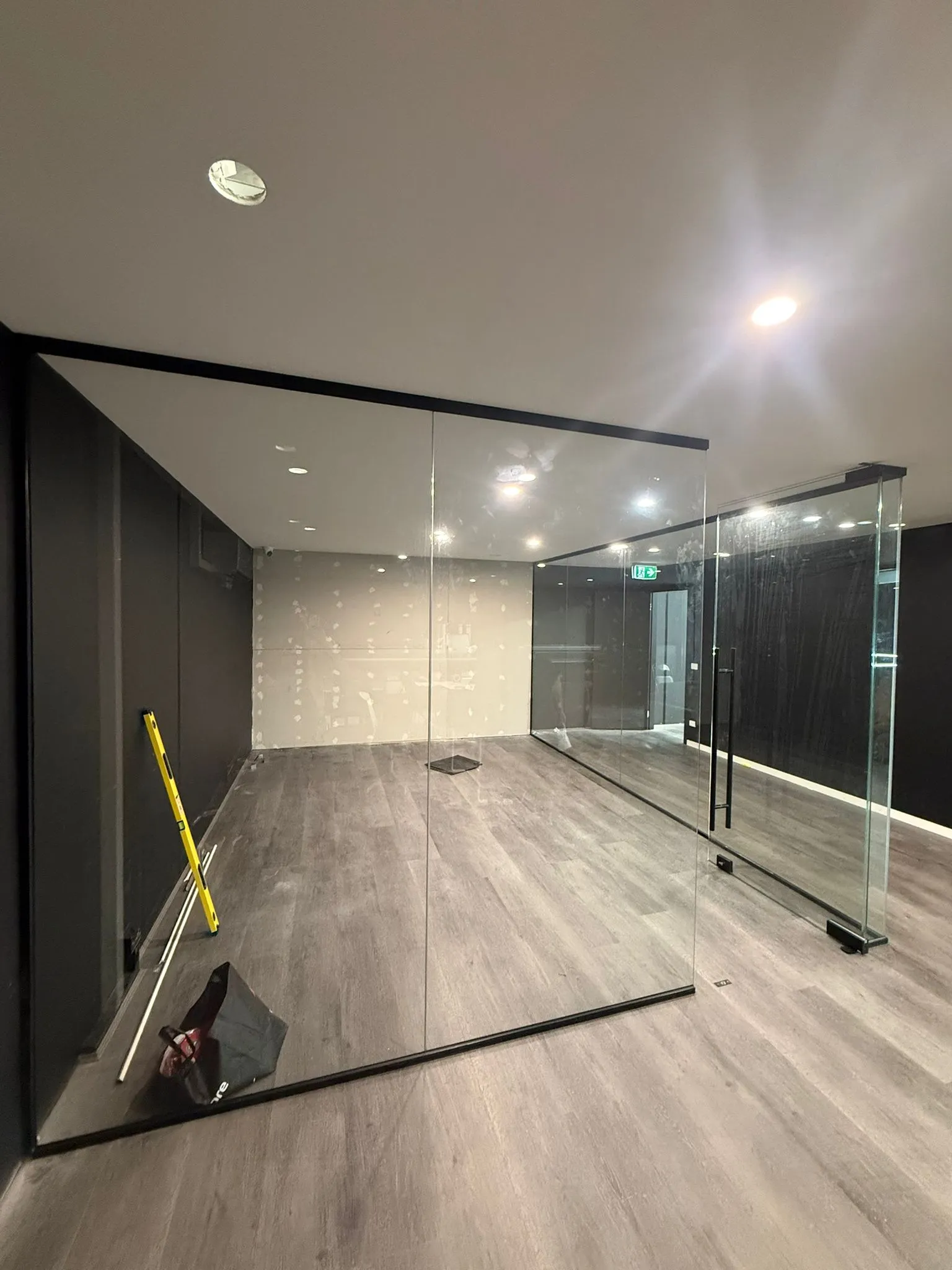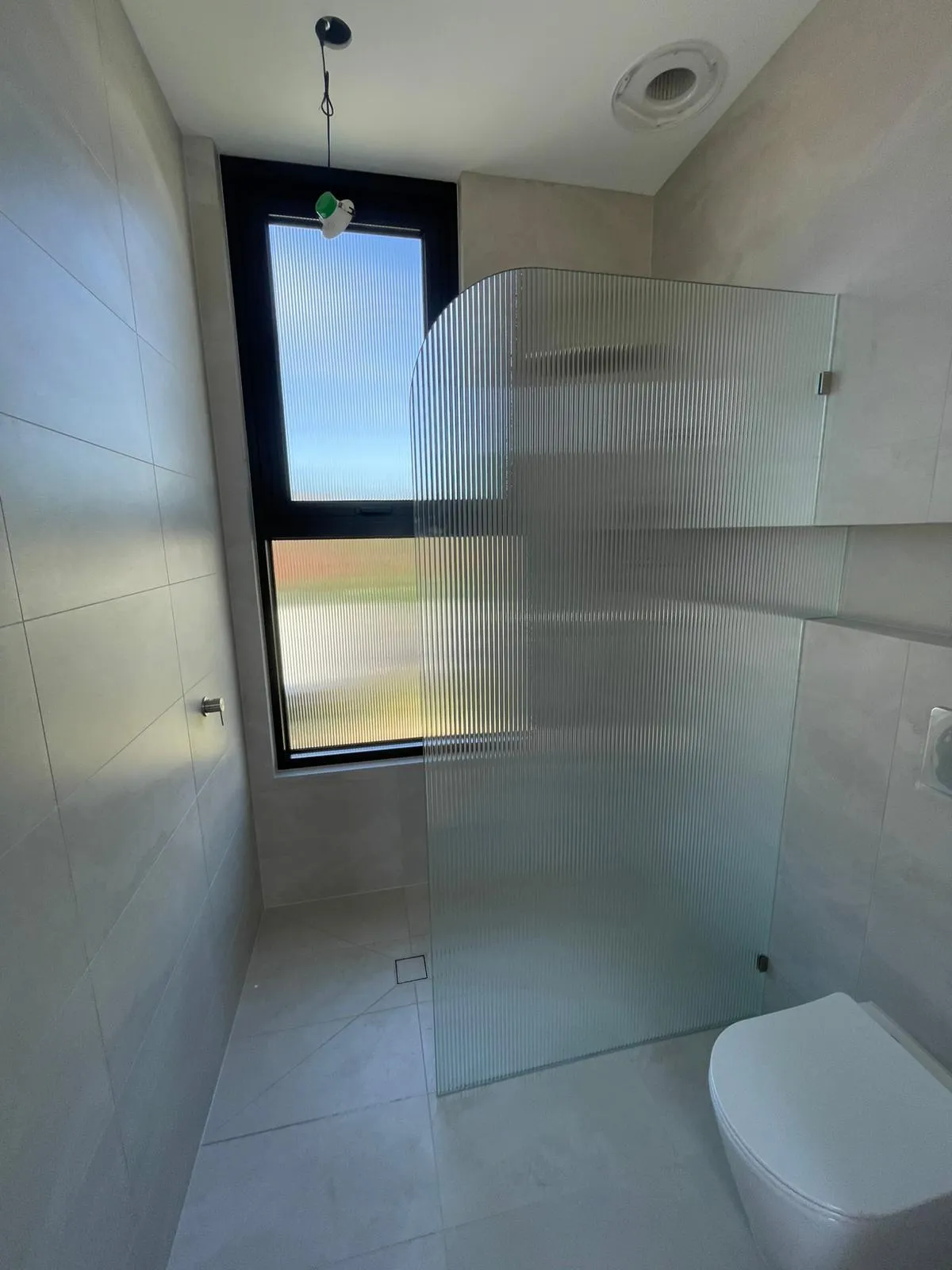
Hold a sheet of ordinary glass on its edge and look down it. It is green. Not a little — distinctly green. That colour is iron, a natural impurity in the sand float glass is made from, and it is in every standard pane in the country.
Most of the time you never notice it, because you are looking through the face of the glass, not its edge, and the pane is thin. But there are projects where that green cast steps forward and becomes a problem — and that is where low-iron glass earns its place.
Low-iron glass — sold as Starphire, Superclear and similar — is made with the iron content reduced. It reads neutral. Edge-on it is nearly colourless. The difference, once you have seen the two samples side by side, is not subtle.
It matters most in three situations. The first is pale palettes. If a bathroom or kitchen is built in white, low-iron stone, or soft greys, standard glass pushes a faint green over everything seen through it or behind it. White becomes very slightly off-white; pale stone loses its warmth.
The second is thick glass. The green compounds with thickness. A 6mm splashback is one thing; a 12mm structural panel or a stacked balustrade is another. The more glass the light travels through, the more colour it picks up.
The third is back-painted glass. When you colour-match a splashback to a Dulux or Porter’s chip, the paint sits behind the glass — and the green of standard float shifts the colour you actually see. Pale colours suffer most. We default to low-iron for back-painted work at our premium tier for exactly this reason.
Low-iron is not free. Expect a glass-cost uplift in the order of 30 to 80 per cent, depending on the application. So we do not specify it everywhere by reflex. In a darker palette, in a warm-toned room, or in thin glass, standard float is perfectly honest and the money is better spent elsewhere.
The point is simply to make the decision deliberately. At consultation we put a low-iron sample next to a standard one, in the actual room, in the actual light. Five minutes with the two samples answers the question better than any amount of explanation.
Written by Jason Ah-Young, Director of Maison Glass & Aluminium. For advice on a specific project, book a consultation.